



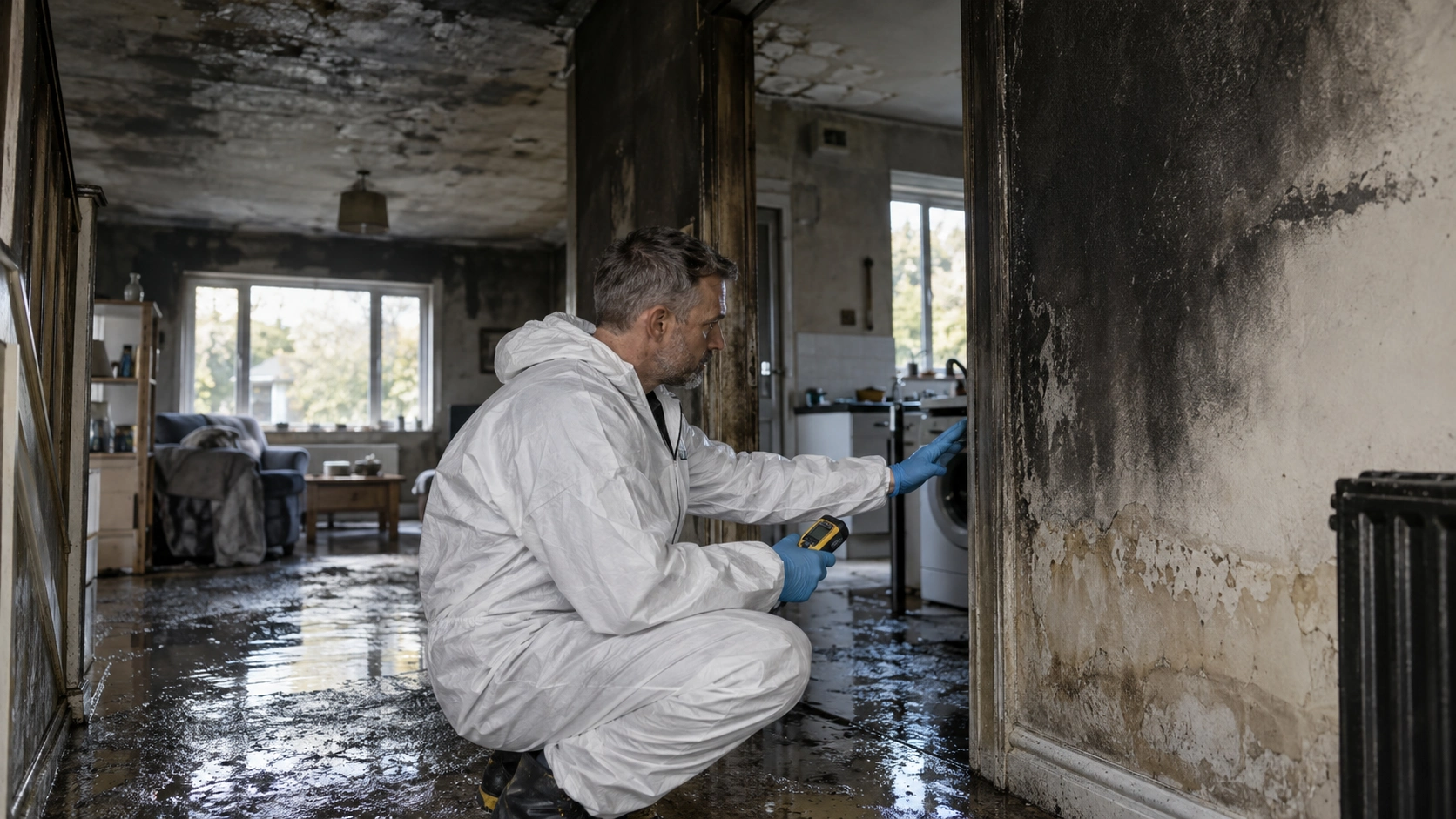
When people think about fire damage, they picture the obvious: charred walls, a burnt-out kitchen, blackened timber. But in almost every fire, the damage that ends up costing the most to put right isn’t the fire itself. It’s everything the fire left behind.
Smoke contamination, soot deposits, lingering odours, and the water used to put the fire out can affect far more of a property than the flames ever touched, and it’s this secondary damage that insurers most often underestimate or miss entirely when a claim is first assessed.
Fire damage cover is broader than most people realise
Most home and commercial insurance policies covering fire don’t just pay for repairing what burned. They’re intended to cover the full cost of restoring the property to its pre-fire condition, which typically includes:
- Structural and heat damage to walls, ceilings, and framing, even where there’s no visible burning
- Smoke and soot contamination, which can travel through a property via air ducts, gaps in flooring, and ventilation systems, reaching rooms nowhere near the fire itself
- Firefighting water damage, since extinguishing a fire, particularly by the fire service, often means significant quantities of water passing through ceilings, walls, and floors
- Odour removal, which frequently requires specialist treatment rather than simply airing the property out
- Contents damage, including items affected by smoke residue or heat even if they weren’t directly burned
Why this damage gets underclaimed
Assessors often focus on the visible burn area. It’s natural to concentrate on the room where the fire started, but soot and smoke particles are extremely fine and travel further than most people expect, settling into carpets, soft furnishings, and even inside electrical fittings in rooms untouched by flames.
Smoke and soot damage isn’t always immediately visible. Some contamination only becomes apparent over the following days or weeks, as odours persist, surfaces discolour, or metal fittings begin to corrode from acidic soot residue. If a claim is settled quickly, before this becomes clear, it may not account for it at all.
Firefighting water is sometimes treated as a separate, lesser issue. Large volumes of water used during firefighting can cause damage every bit as serious as an escape of water claim, saturating floors, ceilings below the fire, and insulation, yet it’s sometimes overlooked in the rush to focus on fire-specific repairs.
Standardised repair estimates don’t always reflect reality. Just as with other property claims, cash settlements or repair scopes based on generic costings can underestimate what’s actually needed, particularly when specialist smoke and odour remediation is involved.
What proper fire damage restoration actually involves
A thorough response to fire damage typically covers several stages: emergency stabilisation to secure the property and prevent further damage, full assessment of both visible and hidden damage, professional smoke and soot cleaning (not just surface cleaning, but treatment of contaminated air, surfaces, and materials), water remediation where firefighting water has caused saturation, and finally full reinstatement of affected areas.
Missing any one of these stages, or having them scoped too narrowly, is often what leads to problems resurfacing months later: lingering smells, staining reappearing through fresh paint, or corrosion in fixtures that weren’t properly treated at the time.
Getting the assessment right before you settle
Because so much fire damage isn’t visible at first glance, it’s worth having a full, independent assessment carried out before agreeing to any settlement, whether that’s a repair scope or a cash offer. Once you accept a settlement, it’s much harder to go back and claim for damage that surfaces later.
This is where the distinction between a loss adjuster and a loss assessor matters. A loss adjuster is instructed and paid by the insurer, and their assessment reflects the insurer’s interests. A loss assessor is appointed by you to make sure the full extent of the damage, visible and hidden, is properly documented and accounted for before anything is agreed. You can read more about how loss assessors work and why it matters.
If you’re still in the immediate aftermath of a fire, it’s also worth reading our guide on what to do immediately after property damage, since the steps you take in the first few days can shape how much of the damage ends up properly documented.
Frequently Asked Questions
It should, provided the contamination can be shown to have resulted from the fire. This is exactly the kind of damage that gets missed when an assessment only looks at the room where the fire started, so it’s worth having every affected room properly inspected, not just the obvious one.
Policies generally require you to report damage as soon as reasonably possible. Beyond notifying your insurer promptly, it’s also worth documenting the scene with photos and video before any cleanup begins, since this evidence often matters later if the scope of damage is disputed.
In many cases, yes, though the details depend on your policy and how the claim is being managed. If you’d rather not use the insurer’s network, or you want a second opinion on the scope of work, that’s something a loss assessor can help you arrange properly.
It’s much harder once repairs are complete and the property has effectively been signed off, which is exactly why odour and hidden contamination need to be identified and documented before a settlement is agreed, not after.
No. If the scope of repairs or the settlement figure doesn’t reflect the full extent of the damage, including smoke, soot, and firefighting water, you can challenge it and ask for a clear breakdown of how it was calculated.
Fees vary depending on the type of service and the scale of the claim, and it’s something you should always ask about upfront before committing to anything. Get in touch with UK Property Claims directly and we’ll explain exactly how it works for your situation before you decide.
How UK Property Claims can help
We handle fire damage claims through whichever level of support suits your situation: full claim management if you just need the paperwork and insurer negotiation handled professionally; a complete claim and restoration service covering everything from emergency strip-out and smoke cleaning through to full reinstatement; or appointed contractor work if you’re managing the claim yourself but need specialist fire restoration carried out to a proper standard.
In every case, we work for you, not the insurer, making sure smoke, soot, and water damage are properly assessed and included, not quietly left out of the settlement.
If you’ve had a fire and want to make sure your claim reflects the true extent of the damage, visit our fire damage claims page or get in touch for a free, no-obligation valuation quote.