



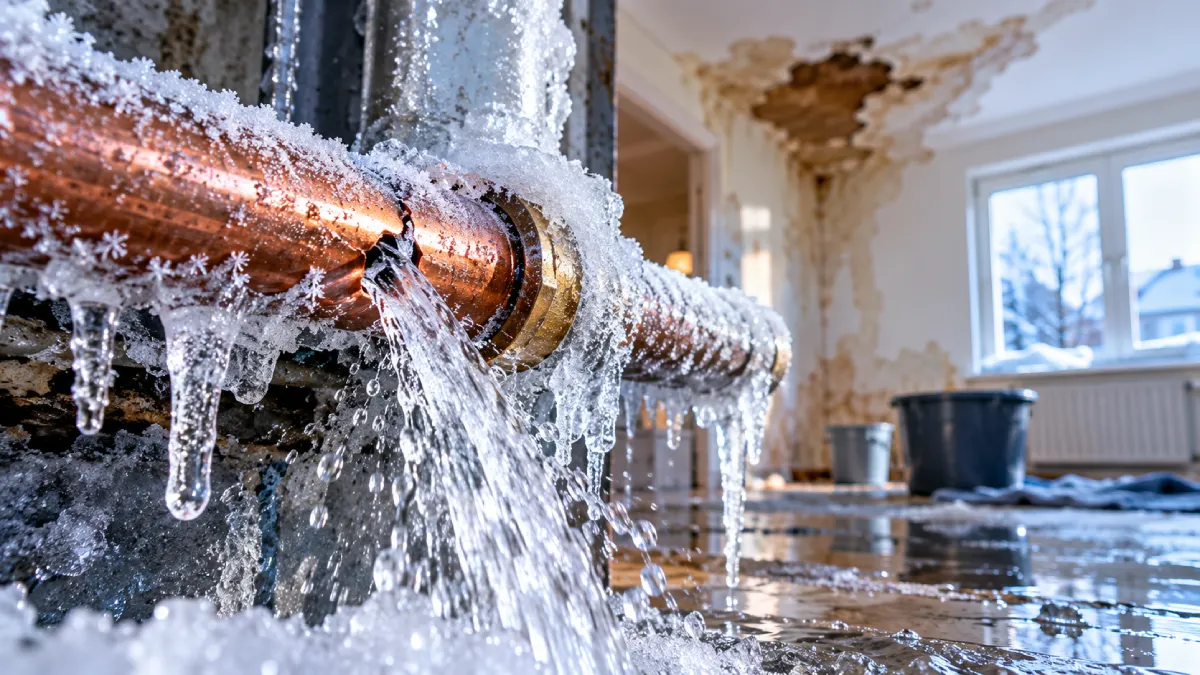
As temperatures drop, the risk of a burst pipe rises sharply. Water expands when it freezes, and a pipe that has frozen solid overnight can split the moment it starts to thaw. By the time the leak is noticed, water may already have soaked through ceilings, floors and walls.
The good news is that most frozen pipe damage is preventable, and where it does happen, a well-prepared frozen pipe insurance claim gives you the best chance of a fair settlement. This guide covers how to protect your pipework this winter, the policy conditions that can catch property owners out, and what to do if a pipe bursts. If you are already dealing with damage, our burst pipe insurance claims team can help straight away.
Why Pipes Burst in Cold Weather
When water freezes inside a pipe, it expands and creates pressure between the ice blockage and the nearest closed tap or valve. Copper and plastic pipework can only take so much before it cracks or a joint gives way. Often the split goes unnoticed until the ice melts and water starts to flow.
Some pipes are far more vulnerable than others. Pipes in lofts, garages, cellars and other unheated spaces are most at risk, along with pipework running along external walls, outside taps and boiler condensate pipes. Empty properties with the heating switched off, and older pipework already weakened by corrosion or poor joints, are also common trouble spots.
Once a pipe bursts, the damage can spread quickly. A split pipe in a loft can bring down a ceiling, while a leak under a floor can saturate joists and screed before any water is visible. This is why burst pipes are one of the most common causes of escape of water claims in the UK during winter.
How to Prevent Frozen Pipes This Winter
A few simple checks before the first hard frost can save you thousands of pounds in repairs, and they also show your insurer that you have taken reasonable care of the property.
Burst pipes are costly for insurers too. According to the Association of British Insurers, £153 million of weather-related home insurance claims in 2023 came from burst pipes, most of them during the cold snap at the start of the year.
- Find your stopcock now. Make sure everyone in the household knows where it is and that it turns freely. A stiff or seized stopcock wastes vital minutes in an emergency.
- Lag exposed pipework. Foam pipe lagging is inexpensive and easy to fit. Prioritise pipes in lofts, garages and along external walls, and insulate your cold water tank if it sits in the loft.
- Keep the heating on low. During cold spells, set the heating to come on for short periods or run it at a low constant temperature, even when you are out or away.
- Let warm air circulate. Open loft hatches and kitchen cupboard doors under sinks on very cold nights so warmer air can reach the pipes.
- Isolate and drain outside taps. Turn off the internal valve that feeds an outside tap, then open the tap to drain the remaining water. Fit an insulated tap cover for extra protection.
- Fix drips and dripping taps. A slow drip can freeze and block a pipe or overflow, so repair minor leaks before winter.
- Check your boiler condensate pipe. If it runs outside and freezes, your boiler may stop working. A frozen condensate pipe can usually be thawed with warm (not boiling) water.
- Plan for time away. If you are leaving the property for more than a few days, leave the heating on low or drain down the system, and ask someone to check the property regularly.
If You Think a Pipe Has Frozen
If a tap runs slowly or not at all in freezing weather, a pipe may be frozen. Turn off the water at the stopcock, then thaw the pipe gently using a hairdryer on a low setting or a hot water bottle, starting from the end nearest the tap. Never use a naked flame or blowtorch, and check carefully for splits before turning the water back on.
Policy Conditions That Can Affect a Burst Pipe Claim
Most home and buildings insurance policies cover sudden damage caused by a burst pipe. However, the small print often includes winter-specific conditions, and failing to meet them can reduce or even void a claim. It is worth checking your policy for the following before the cold weather sets in.
Unoccupancy clauses. Many policies restrict cover once a property has been empty for a set period, commonly 30 or 60 consecutive days. After that point, escape of water cover may be reduced or removed entirely unless you have told your insurer and agreed specific terms.
Heating and draining conditions. Some policies require the heating to be kept on at a minimum temperature during winter months, or the water system to be drained down, when the property is unoccupied. If a pipe freezes while these conditions have not been met, the insurer may decline the claim.
Maintenance and wear and tear. Insurers generally cover sudden and unforeseen events, not gradual deterioration. If corroded or poorly maintained pipework is blamed for the burst, the claim may be challenged. Keeping records of plumbing work and servicing helps show the property has been properly looked after.
Escape of water excess. Many policies carry a higher excess for escape of water than for other types of claim, sometimes several hundred pounds or more. Check this figure so you know what you will contribute.
Trace and access cover. If the burst is hidden inside a wall or under a floor, trace and access cover can pay for locating it and for the work needed to reach it. Professional leak detection helps pinpoint the source with minimal disruption.
If anything in your policy wording is unclear, ask your insurer or broker before winter rather than finding out after a claim.
If a Pipe Bursts: What to Do in the First Hour
Acting quickly limits the damage and puts you in a stronger position when you claim. For more detail on each step, see our guide on what to do after a leak or burst pipe.
- Turn off the water at the stopcock to stop the flow.
- Switch off the electricity at the consumer unit, if it is safe to reach and dry, when water is near sockets, wiring or light fittings. Do not touch electrics with wet hands.
- Drain the system by opening cold taps and flushing toilets to empty the remaining water from the pipes.
- Turn off the boiler and heating if the burst is on the heating circuit.
- Photograph and video everything before you move items or start cleaning up, including the burst pipe itself.
- Move valuables and furniture away from the water where it is safe to do so, but keep damaged items for the insurer or loss assessor to see.
- Call a plumber for an emergency repair and keep the invoice and any report on the cause of the burst.
- Notify your insurer promptly. Delays can be used to question a claim or the extent of the damage.
The visible water is only part of the problem. Moisture can travel behind plasterboard, under laminate and into timber, so professional drying and moisture readings are essential. Our drying and dehumidifier hire service helps stop secondary damage such as damp and mould, and the drying records support your claim.
Making a Frozen Pipe Insurance Claim
Once the immediate emergency is under control, the claim itself begins. Your insurer will usually send a loss adjuster to inspect the damage. It is important to remember that the loss adjuster is appointed by the insurer, and their role is to assess the claim on the insurer’s behalf.
Frozen pipe claims often run into the same problems. Insurers may suggest the burst was caused by wear and tear rather than freezing, or ask whether the heating was on and the property occupied. Hidden moisture can be missed, leading to low drying and repair estimates, and redecoration, flooring or matching items may be left out of the settlement. There can also be pressure to accept an early offer before the full extent of the damage is known.
If your claim has already been turned down or the offer feels too low, our guide on what to do when an escape of water claim is rejected or underpaid explains your options.
Frozen Pipe Insurance FAQs
How UK Property Claims can help
UK Property Claims works for you, not the insurer. We assess the full extent of the burst pipe damage, including areas you cannot see, prepare a fully evidenced claim and negotiate directly with your insurer. Where needed, we also coordinate drying, repairs and reinstatement, so you have one point of contact from start to finish.
If a frozen or burst pipe has damaged your home, rental property or business premises, visit our burst pipe insurance claims page or call us on 0800 121 4452 to arrange a free claim assessment.